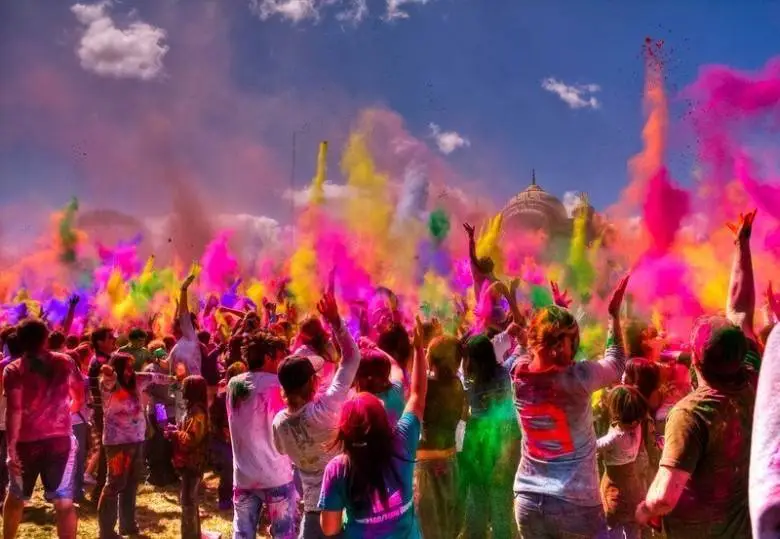
Holi ranks among the biggest festivals in India, and in the holy city of Varanasi it gets celebrated with a kind of energy that's hard to describe until you've stood in the middle of it. For a few days the whole place turns into colour, music and dancing, and honestly it's the sort of thing that stays with you long after the powder has washed off. Here's a look at how Holi plays out in Varanasi, what the festival actually means, and the traditions wrapped up in it.
What Holi Actually Means
At its core Holi is a Hindu festival about good winning out over evil. It goes back to ancient India and people have marked it for thousands of years. The date lands on the full moon day in the Hindu month of Phalguna, which usually works out to February or March.
Several myths sit behind the festival, but the one everyone tells is the story of Prahlad and Holika. Prahlad was a devout follower of Lord Vishnu. His father, the demon king Hiranyakashipu, wanted the boy to worship him instead, and when Prahlad refused, the king ordered his sister Holika to burn the child alive. It backfired. Holika was reduced to ashes while Prahlad walked away unharmed, protected by Lord Vishnu. So Holi marks that triumph of good over evil, and Prahlad's victory over Holika.
Holi in Varanasi
Varanasi is one of the oldest and holiest cities in India, with centuries of history packed into it. Temples everywhere, ghats along the river, narrow alleys that feel like they haven't changed in a very long time. Come Holi, locals and visitors pile in together and the whole city goes under a coat of colour.
Things kick off the evening before the main day with Holika Dahan. A bonfire is lit and people gather round it to pray and ask the gods for their blessings. The fire stands in for the burning of Holika, the demon king's sister.
The main day goes by Rangwali Holi, or Phagwah. This is when it all lets loose. People smear each other with coloured powder and let fly with water balloons and water guns, and the streets fill up with dancing to the beat of the dhol. For that one day nobody much cares who anyone is. It's pure joy, if you ask me, everyone just out to have a good time.
If you want the full experience, head for the ghats along the River Ganges. These are the stone steps running down to the water, and they're central to what Varanasi is. During Holi they turn riotous with colour as people cover each other in gulal (coloured powder) and lob water balloons back and forth. It's chaos, frankly, in the best way, with folk music going and people dancing and singing on every step.
The other spot worth knowing about is Banaras Hindu University, or BHU. Every year the university throws a big Holi celebration that pulls in thousands, with cultural programmes, food stalls and live music. If you'd rather take in the festive side of Holi somewhere a bit more organised, that's the place.
The Traditions Behind It
Holi isn't only about colour and music. There's a ritual side too. One well-known tradition is Lathmar Holi, celebrated in the nearby town of Barsana.
0 Comments
Leave a Comment