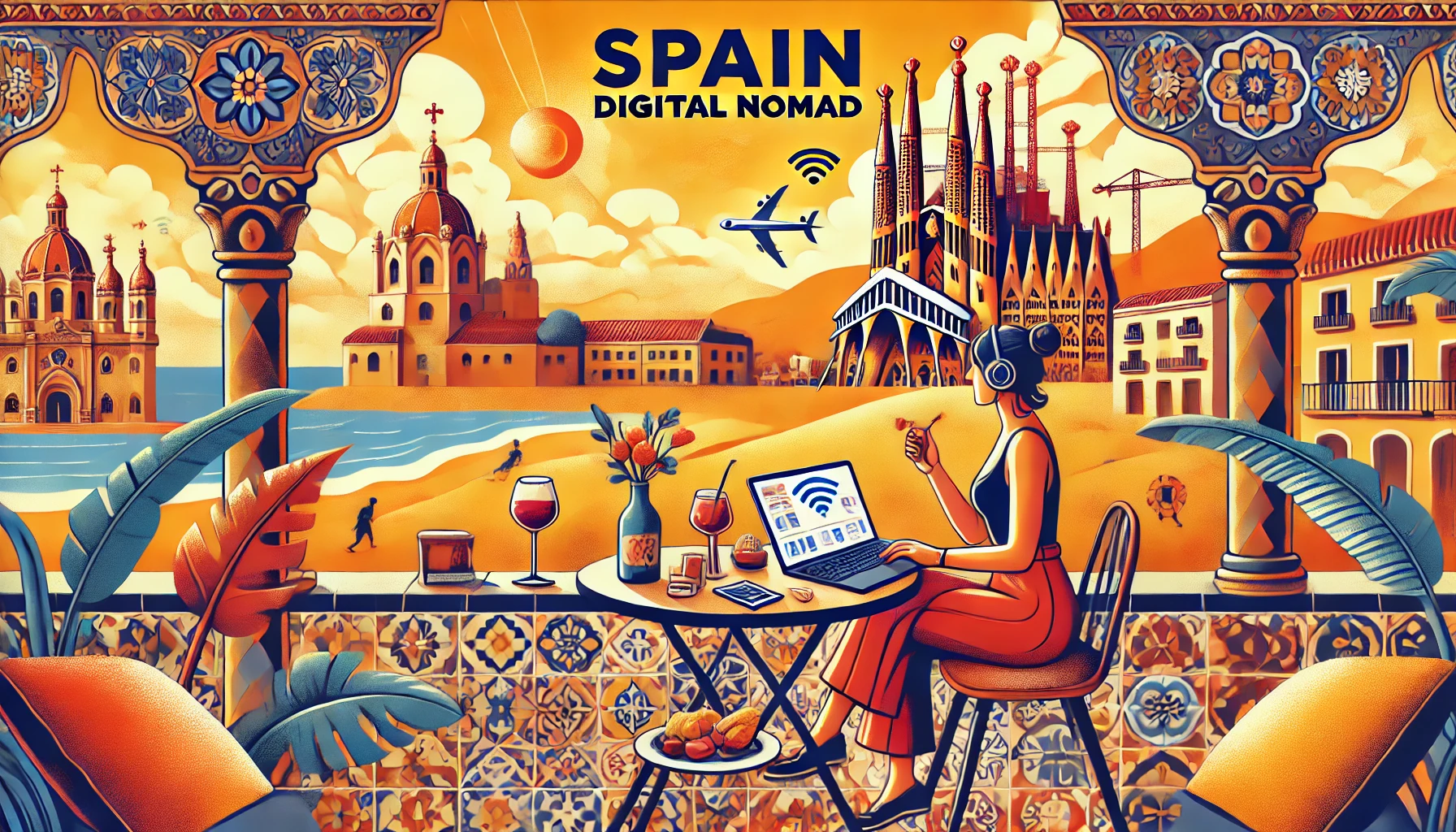
So you want to live in Spain as a digital nomad, residency permit and all? On paper it's the dream. Long sunny afternoons, a culture that actually knows how to switch off, and the freedom to open your laptop wherever you happen to be. But what's it actually like once the novelty wears off? Let me drop the Instagram filter for a minute and tell you straight.
The pull is real, I won't pretend otherwise. The quality of life here is hard to top, full stop.1 One morning you're nursing a café con leche in some quiet plaza while Spanish chatter drifts past you, and a weekend later you're up in the Pyrenees, those big serious mountains sitting there in complete contrast to the Mediterranean below. And the food. Tapas, paella, seafood so fresh it barely needs cooking. Honestly, eating here is half the reason to come.

Spain has turned into one of the go-to spots for digital nomads who want work, downtime and culture in roughly equal measure. Cities with a pulse to them, a coastline that goes on for miles, living costs that won't wipe you out, and now the Digital Nomad Visa on top of that — no wonder freelancers and remote workers keep showing up from all over. If you're a freelancer thinking about making Spain home, Diar Travel is here to walk you through the visa application without the usual headache.
The residency, though? That's where it gets interesting. Spain's digital nomad visa is still fairly new, and it opens up a lot.2 Non-EU citizens get to live and work remotely here for up to a year, with the door open to extend.3 The catch is the bureaucracy, which can feel like being handed a map to a maze that keeps rearranging itself.
The Paper Chase:
- Financial stability: You'll have to show a solid, steady income, usually above a set threshold.4 That means bank statements, contracts, and quite possibly proof of professional experience too.
- Health insurance: Private cover with full coverage in Spain isn't optional — it's required.5 Public healthcare is excellent, but you generally only get access to it after you've been resident a good while.
- Background checks and certifications: Line up your criminal record checks, and be ready to get some documents officially translated.6
- The application process: think obstacle course. Patience really is your best friend here.
Once the Forms Are Done:
Then the actual living starts. Valencia, Barcelona and Madrid are the usual magnets, packed with good co-working spaces and a real community of people doing the same thing you are.7 Prefer something calmer? The smaller towns and coastal villages run at a gentler pace, and to be fair that suits a lot of people better.
The Real Talk:
- Cost of living: It swings a lot by location, so budget accordingly. Rent in the big cities, in particular, can take a real bite.
- Language barrier: Plenty of Spaniards speak English, especially around the tourist spots, but learning the language properly will do far more for your time here than any phrasebook.
- Siesta culture: It's not quite the cliché people imagine, but yes, expect shops and businesses to shut for a few hours in the afternoon.8 Just roll with it and enjoy the slower gear.
- Bureaucracy: Visa in hand doesn't mean you're done with paperwork. Get comfortable with the "mañana" attitude and expect the odd delay.
- Healthcare: Private cover keeps you going day to day, but it's worth learning how the public system works, especially if you're thinking long term.
The Verdict:
Living in Spain as a digital nomad is, if you ask me, a brilliant opportunity. You sink into a culture that actually values living well. The standard of life is high, and you're working from a place that keeps pulling your eyes up off the screen. It does ask something of you though — planning, patience, and a willingness to bend with how things get done here.
Most days the payoff outweighs the hassle, and not by a small margin either. Building a life in a country this beautiful and this varied isn't the sort of thing you forget.
0 Comments
Leave a Comment