Once the leaves turn and the evenings get that first real chill, Mexico shifts into gear for Día de los Muertos, the Day of the Dead. It runs from October 31st through November 2nd, and the whole point of it is to remember the people you've lost. The centre of it all is the ofrenda, the altar you build at home or out at the cemetery. People pile them with photographs, the food and drink the departed actually loved, and heaps of marigolds, whose scent is meant to lead the dead back to their own altar. Halloween itself? It's never been a huge deal here in the way it is up north. But that's changing. More families are hanging decorations and joining in the fun, so I wanted to walk through some of the ways it all plays out.
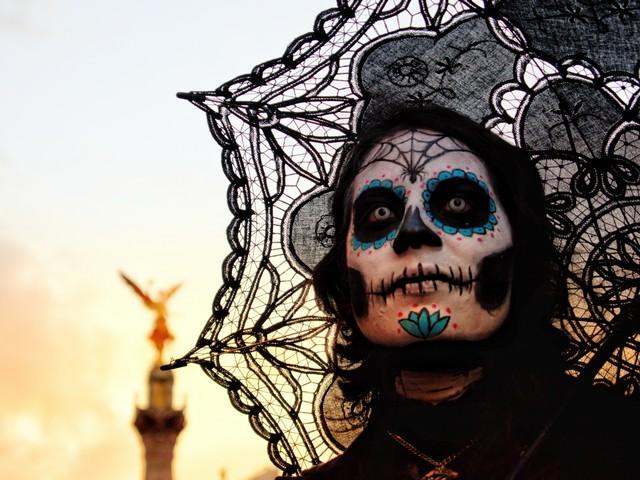
The decorations
You'll see a mix of old and new when Mexican homes go up for the season. Pumpkins, skulls, skeletons, ghosts, the usual cast of characters. Houses and shops alike get dressed up, and the effect is properly festive.
None of this is new, though. The roots go back centuries, to the old festivals of the dead that were held right across Mexico and Central America long before anyone here said the word "Halloween." What has shifted, and quickly, is how the modern version has caught on. People like the mood of it, so they lean in.
If you ask me, decorating is honestly the easiest way to get yourself into the swing of things. There's plenty to choose from at every budget, traditional or otherwise, and the classic pumpkins-skulls-skeletons-ghosts lineup covers most tastes. Deck out the house or the office and you're most of the way there.
Fancy a bit of drama this year? Give the Mexican look a go. I'd bet money it gets a reaction from anyone who walks in.
What people eat
You can't really talk about Mexicans decorating for Halloween without getting to the food, which is half the reason to show up. Mexican cooking changes a lot from one region to the next, every area with its own thing, but around this time of year a few dishes turn up everywhere. Sweetbreads baked into the shape of skulls and bones, for one. And candy made to look uncannily like eyeballs, which the kids love and the adults pretend to find gross.
Then there's the drinking side of it. Pulque is the classic call, a fermented agave brew that goes all the way back to the Aztecs, or so the story goes. If you'd rather something warm, there's atole, a hot drink made from maize and flavoured with fruit or chocolate.
Things people actually do
Much of it comes back to the altars. Families build them for the relatives they've lost and leave out food and drink as offerings. Before that, though, there's a good clean, houses and yards sorted out ahead of the day. The ofrenda sits at the heart of Dia de los Muertos, and it's usually made up of photos of the departed, candles, marigolds, and whatever small things mattered to that person while they were alive. The food and drink go out too, an invitation of sorts.
Where it all comes from
Trace Halloween back far enough and you land at the Celtic festival of Samhain. It fell on the last day of the Celtic calendar, and people would light bonfires and pull on costumes to scare off evil spirits.
Then Christianity moved across Europe, and the church did what it often did, folding the old pagan customs into new Christian holidays. All Saints Day, on November 1st, was set aside to honour saints and martyrs. Halloween, as best anyone can tell, came out of that blend of All Saints Day and Samhain.
In Mexico it goes by El Día de los Muertos, the Day of the Dead. It's about the people you've loved and lost. Families decorate gravesites with flowers and candles, and plenty of them hold gatherings at home too.
One symbol you can't miss is the sugar skull. They're iced in bright colours, often with a name written across the forehead, and they get used both as decoration and as gifts you hand to people you care about.
Celebrating it the Mexican way
As I said, here it's El Día de los Muertos, the Day of the Dead, and it lands on November 1st and 2nd. The whole thing is built around remembering the ones who've passed.
The altars, the ofrendas, are how it happens. They carry photographs of the departed and their favourite foods and drinks. Flowers matter a lot too, marigolds above all, since they're believed to guide the souls of the dead back to where they belong.
On the night itself, families tend to stay together, swapping stories about the ancestors and eating the good stuff, pan de muerto (a sweet bread), tamales, mole poblano (that dark, complicated sauce). Candles burn to light the way home for the souls.
Want to do Halloween the Mexican way? Spend a little time with the traditions first. Build an altar for the people you miss, eat well, tell a few stories that give everyone a chill.
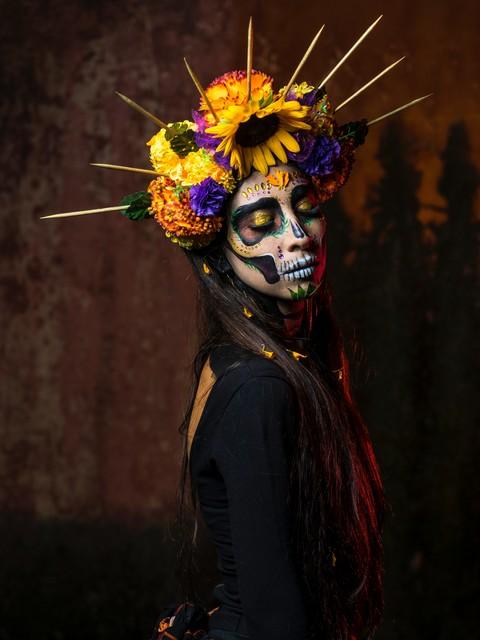
So what is Halloween, anyway?
Short version: it falls on October 31st, people dress up and go trick-or-treating, and the whole thing traces back to the Celtic festival of Samhain. Irish immigrants carried it over to America.
A bit of history
Halloween, or All Hallows' Eve, sits on October 31. Most people trace it to the ancient Celtic festival of Samhain, which marked the end of the harvest and the start of winter. The Celts reckoned that on that one night the line between the living and the dead thinned out, and ghosts could slip back to earth. To keep the bad ones at bay, they lit bonfires and wore costumes stitched from animal skins.
The dressing-up-and-knocking-on-doors part probably grew out of early Christian celebrations of All Saints' Day. People would dress as saints and go door to door round the neighbourhood, asking for food in return for prayers. Over time that turned into trick-or-treating as we know it.
In Mexico it's "El Día de los Muertos," the Day of the Dead, held on November 1st and 2nd to line up with the Catholic feasts of All Saints' Day and All Souls' Day. Here the emphasis isn't ghosts or witches at all, it's honouring the people you've lost. Families build altars at home dressed with photos, candles, flowers, and the favourite foods and drinks of the departed. The belief is that during the Day of the Dead
How Mexicans mark the day
In a lot of ways it looks like the American version. Homes get decked out with pumpkins, ghosts and skeletons, and people happily dress up and head out trick-or-treating.
The big difference is the Day of the Dead altars. They're decorated with pictures of loved ones who've passed, along with flowers and other offerings. The idea is that the spirits of the dead come back to visit on Halloween night.
Here's another one: instead of candy, Mexican kids often come home with fruit or nuts from their rounds. For a lot of families, sweets simply aren't in the budget.
Decorating, dressing up, trick-or-treating, sure, but underneath all that runs a quieter thread: remembering the people who are gone by setting up the altars.
What to expect if you're there for it
Spend Halloween in Mexico and you'll run into the traditional decorations pretty fast, skulls, skeletons, pumpkins. You might also spot people in traditional Mexican dress, the well-known Day of the Dead costumes among them. And yes, there'll be no shortage of candy and sweets to go round.
Last thoughts
Halloween is a good time, and Mexicans throw themselves into it as much as anybody. Decorating for it is a tradition a lot of families keep, and you don't need much of an excuse to join in. If you're after a bit of inspiration for your own place, take a look at what these Mexican artists are doing.
0 Comments
Leave a Comment