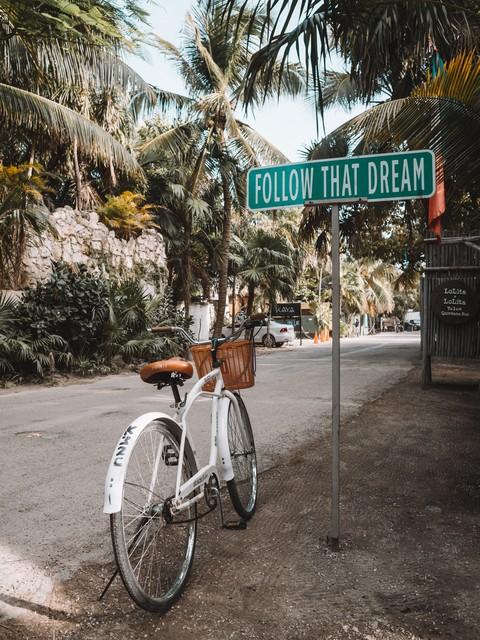
Travel has changed a lot in the last ten years, and I don't think we always notice how much. Technology put the whole world within reach: we connect with other cultures and total strangers in seconds, we book flights and rooms with a few taps, and there's more information at our fingertips than any of us could ever read. Handy, sure. But it came with a few odd new problems too. Where do you even start looking for a good place to go when the options are endless? And how do you make real friends when you never stay put for long? That's what I want to dig into here, along with a few other things I've picked up along the way.
Travel as a way to grow
Everyone knows travel is enriching. You see different cultures, you meet new people, you learn things you'd never learn at home. What gets talked about less is how much it can actually change you as a person.
There's a lot going on there. For starters, it teaches you to adapt. When you're somewhere unfamiliar you have no choice but to roll with whatever happens, and that pushes you to be more open-minded. New places and new faces have a way of poking holes in the assumptions you didn't even know you were carrying. You also get more self-reliant, because half the time there's nobody around to sort things out for you. It's just you.
The biggest thing, honestly, is perspective. Travel shrinks your own problems down to a more reasonable size. When you watch how other people live, day to day, and you spend time inside a culture that isn't yours, you start to understand the world a bit better, and you notice just how much variety is out there.
So if you feel stuck, go somewhere new. Odds are you'll come home seeing a few things differently.
The different ways to get there
There's the car, the train, the plane, the boat. Each one has its trade-offs.
Driving is still the default in the United States. It's fairly cheap and it hands you total freedom: go where you like, leave when you like. The downside is time, and stress. Get stuck in traffic and that freedom stops feeling like freedom pretty fast.
Trains are a solid way to cover long distances. Often cheaper than flying, and a lot more relaxing than sitting behind the wheel. That said, they get crowded, the seats aren't always comfortable, and they don't always drop you exactly where you're headed.
Planes are the fastest option, no contest. They can cost a fortune, though there are deals if you book early. And they come with their own particular brand of stress, all the security checkpoints and TSA screenings before you've even boarded.
Boats are slower than a car or a plane, but that's kind of the point. There's something genuinely calming about watching the scenery drift past as you head down a river or across open ocean. The catch is they're pricey, and they might not go anywhere near where you actually want to end up.
How to find the best travel deals
A few things really move the needle when you're hunting for a deal. Stay flexible on your dates and where you go. Check more than one place for prices. And don't be too proud to lean on a travel agent.
Flexibility is the big one, if you ask me. When you can shift your dates around, or you're not married to a single destination, your odds of landing a cheap flight or a cheap room go way up. Comparing prices matters too. Use the online sites, Kayak or Expedia and the rest, or just phone the airlines and hotels directly and see who blinks first.
And if you're spinning your wheels on your own, ask an agent. A good one knows every trick in the book and will turn up discounts you'd never have found by yourself.
The best places to travel to in the world
The world is full of incredible places, which is exactly what makes choosing so hard. Still, a handful of destinations stand out enough that they belong on any list. Here are the ones I'd put at the top:
1. Machu Picchu, Peru – This old Incan city is one of the most popular spots in all of South America, and for good reason. Perched high in the Andes Mountains, it serves up incredible views, layers of history, and an experience you won't find anywhere else.
2. The Great Barrier Reef, Australia – The largest coral reef on the planet. If natural beauty is what pulls you to travel, this is one to see. Over 2,000 species of fish and 400 types of coral live down there. It's a whole world underwater.
3. The Galapagos Islands, Ecuador – These are the islands Charles Darwin made famous with his theory of evolution. They're still one of the best places anywhere to get close to rare wildlife, from giant tortoises to iguanas. Plenty to explore.
4. Yosemite National Park, USA – One of America's most loved national parks, with towering mountains, roaring waterfalls, and Giant Sequoia trees that are hard to believe until you're standing under one.
5. Venice, Italy – A city that seems to sit outside of time. It's been pulling visitors in for centuries and shows no sign of stopping
So what is travel, really?
People tend to treat travel as a luxury, the kind of thing only wealthy folks get to do. It doesn't have to be that way. There are plenty of ways to travel on a tight budget, and even if a trip is out of reach right now, you can start putting money aside for one.
And travel isn't only about new places, anyway. It's about getting to know other cultures and coming away with a different read on the world. At its best it's genuinely eye-opening, the sort of thing that quietly shifts how you look at everything else.
So if you're after a fresh perspective, it's worth a thought.
The different types of travelers
Broadly speaking, travelers fall into four camps: the explorers, the directors, the collectors, and the connectors.
Explorers want to see it all and cram in as much as they possibly can. They're impulsive, they go with the flow, and half their best decisions are made on the spot. For them it's all about adventure and trying whatever they haven't tried yet.
Directors are the opposite. Organized, a plan for everything, a firm hand on the wheel. They like sticking to a schedule. Travel, to them, is about ticking items off the bucket list and crossing destinations off, one by one.
Collectors plan ahead like the directors do, but there's an extra layer to it: they gather memories and souvenirs as they go. For them the whole point is building up experiences they can look back on and treasure years down the line.
Then there are the connectors, who see travel mainly as a chance to meet people. They're outgoing, always chatting with the locals wherever they turn up. To them it's about relationships and forging bonds with people from every corner of the world.
Why people travel
People travel for all sorts of reasons. Some go to see new places, some to meet new people, others just to learn about cultures that aren't their own. Whatever's driving it, the payoff can be huge.
Seeing somewhere new is the obvious draw. But there's also the chance to meet people and get a feel for how they actually live, and honestly, sometimes it's just about escaping the daily grind and doing something different for a while.
Whatever the reason, travel tends to reward you. It widens your view and teaches you a thing or two along the way. So why not give it a shot? You might find it's one of the best things you ever do.
How travel has changed over the years
Travel used to be a luxury reserved for the wealthy. Over time, though, it's opened up to people from every walk of life. Better transport, better places to stay, and a lot more affordable options mean pretty much anyone can go out and see new places now.
How we travel has shifted just as much. We're not stuck with buses and trains the way people once were. There are options everywhere. You can be halfway around the world in a matter of hours, and you can line up the flights and the hotels online before you've left the couch. Less time spent planning, more time actually enjoying the trip.
Not all of it is an improvement, mind you. With more people on the move than ever, you get bigger crowds and a lot less privacy. And with the threat of terrorism sitting in the background, plenty of us now travel a little more warily than we used to.
Even so, travel remains one of the most rewarding things you can do. It broadens your horizons and helps you make sense of other cultures and points of view. So whether it's a trip abroad or a weekend away close to home, it's still a chance to learn something and grow a little. Worth it, most of the time.
The future of travel
The future's wide open. As technology keeps advancing, we can reach more of the world than any generation before us.
Virtual reality and augmented reality are already reshaping how we experience a place. Rather than flipping through photos or watching a video of somewhere, we can drop ourselves right into it. You can wander through a new destination without stepping out your front door.
It's going to get more sustainable, too. We're waking up to the toll our trips take on the planet, and we're adjusting to shrink our carbon footprint. Electric vehicles keep getting more popular and more efficient. We're using less energy in other ways as well, staying in smaller places and taking public transport instead of renting a car.
So what does the future of travel look like for you?
One last thought
So that's it, a slightly different way of thinking about travel, and I hope it nudges you to get out there and see the world on your own terms. It won't click for everyone. But if you're open to it, I really think you'll find it's a rewarding way to go about things. Thanks for reading, and enjoy wherever you head next.
0 Comments
Leave a Comment