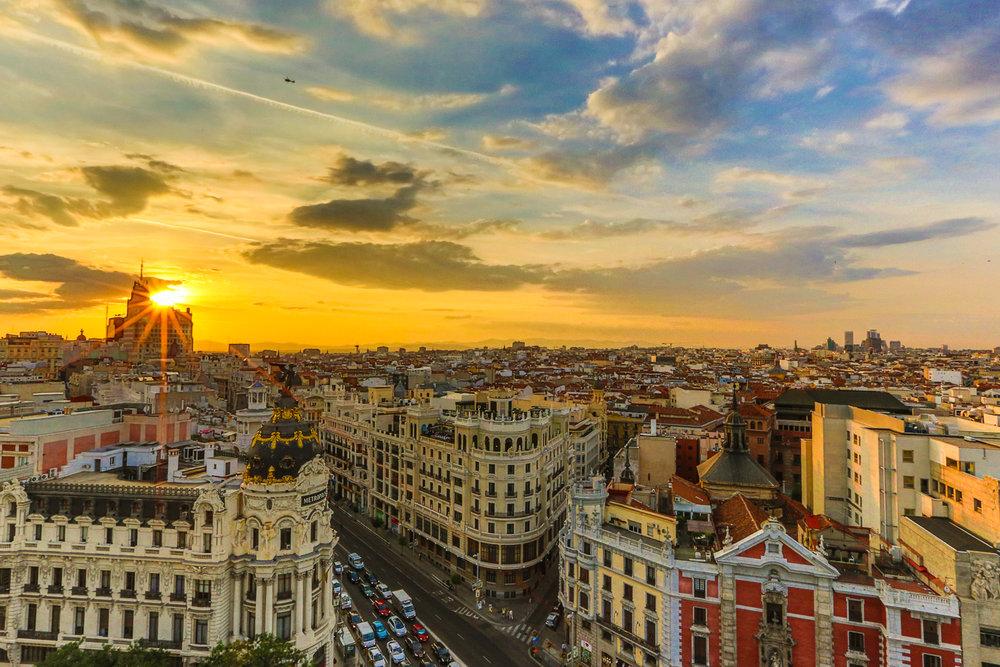
Madrid gets under your skin faster than you'd expect. It's the Spanish capital, sure, and one of Europe's great cities, but what stuck with me wasn't a single monument. It was the mix of it all: the art, the food, the way people stay out until 2am on a Tuesday like it's nothing. There's a lot going on here, and it can feel like a lot to plan around. So I've pulled together the things I'd actually tell a friend to do if they were heading over. Take what appeals, skip what doesn't.
The big-ticket sights
Let's start with the headliners, because you'll want to tick a few of these off no matter what kind of traveller you are.
The Prado Museum first. It's one of the most famous museums in the world and it earns the reputation. The collection of Spanish art is staggering, and there's plenty by other European masters too. If you like art even a little, go. If you don't, honestly, go anyway and give it an hour.
Then there's the Royal Palace of Madrid. This thing is enormous. Built in the 18th century for the Spanish royal family, it's stuffed with opulent rooms and serious artwork. You don't have to care about kings and queens to appreciate it. The architecture alone justifies the ticket.
Plaza Mayor is a different sort of stop. This grand square has sat at the centre of Madrid life since the 16th century, and people still gather there today. Grab a coffee, find a spot, and just watch the square do its thing. It's people-watching at its best.
And flamenco. Don't leave without seeing it at least once. The dance is all fire and feeling, and watching it live is nothing like the clips you've seen online.
Where to eat well
You will not go hungry in Madrid. The harder problem is choosing, because good restaurants are everywhere, from old-school Spanish institutions to more international spots.
A few places I keep coming back to:
1. La Botilleria. A cosy little place, good for a quick bite or a slow one. The menu leans traditional, tortillas and patatas bravas, plus bigger plates if you turn up starving.
2. Lhardy. One of Madrid's most iconic restaurants, and worth the visit for the room alone. The classical French cuisine is spot on and the dining room has this old-world charm you rarely find anymore. Order the coq au vin.
3. El Rincón de Goya. This is where you go for genuine Spanish flavour. The menu pulls classic dishes from all over the country, and the room is warm and unfussy. The paella is the one to get.
4. Zalacaín. Another strong pick for classic Spanish cooking. It sits in one of the prettier neighbourhoods in the city, so you get lovely views alongside a very good meal. Save room, is all I'll say.
After dark
Madrid at night is a different animal. Bars, clubs, late dinners, dancing until you can't feel your feet, it's all on offer.
Gran Via is a good place to begin. The street is lined with bars and clubs, mellow ones and loud ones both. If you'd rather keep it low-key, grab an outdoor table at one of the cafes and watch the city rush past.
Want to dance? Sala Riviera is a favourite for live music. Club Heaven leans more eclectic, with a rotating cast of international DJs.
For a romantic night, book dinner and drinks at Zalacaín, or go for tapas and wine at Café de Chinitas. And if you want something properly special, reserve a table at La Terraza del Casino, where you dine al fresco with the city spread out below you.
Whatever you settle on, start late. Nobody here is in a rush, and neither should you be.
Shopping neighbourhoods
Shopping here isn't one thing, it's several, and each district has its own mood. Gran Vía is the famous one, lined with high-end stores pushing designer clothing, jewellery and cosmetics. On a tighter budget? Head for the El Rastro flea market instead, where you'll turn up everything from vintage clothes to handmade souvenirs. And for traditional Spanish goods, La Latina is your neighbourhood, full of small shops selling ceramics, leather goods and other handicrafts made the old way.
Getting around the city
The metro is your friend here. It's extensive, reliable, and it'll get you almost anywhere without fuss. A single journey ticket runs €1.50 from any station, or you can grab a 10-trip ticket card for €12.00, which is what I'd do. Staying a while? A monthly pass is €60.00 and pays for itself quickly.
Buses fill in the gaps, crisscrossing the city and linking up the metro stops. A single ride is €2.00, or €20.00 for a 10-ride card. And if you're planning to pack in a lot of sightseeing, madridtouristpass.com sells a tourist pass with unlimited metro and bus access plus free or discounted entry to over 50 attractions around the city. Worth doing the maths on if you're the go-go-go type.
A few things worth knowing
Madrid rewards a bit of planning. Some quick pointers before you go:
1. Arrive early to dodge the crowds and get some quiet time in the city.
2. Give the museums and galleries real time, not a rushed hour.
3. Try the traditional Spanish dishes while you're here. Don't just default to what you know.
4. Take a slow walk through one of the parks or green spaces.
5. If architecture's your thing, hunt down some of the city's landmark buildings.
Inside the Museo del Prado
The Museo del Prado is, by most reckonings, one of the great art museums anywhere. Inside is a vast collection of European art running from the 12th century right through to the early 19th. The big names are all here, Velázquez, Goya, El Greco, and the museum rotates in important temporary exhibitions across the year too.
If you love art, put the Prado near the top of your list. And even if art usually leaves you cold, the sheer size and range of the place is something to experience. Give it a couple of hours at least. You'll want them.
Seeing the Royal Palace of Madrid
The Royal Palace of Madrid is the official residence of the Spanish Royal Family. You'll find it in the city centre, on the left bank of the Manzanares River. The numbers are almost hard to believe: more than 3,000 rooms across 135,000 square metres, which makes it the largest royal palace in Western Europe by floor area.
Construction started in 1738, under King Philip V, and it was meant to be a summer residence for the royals. That changed when Charles III moved his court there in 1764 and it became the main royal home. The last monarch to actually live in it was Alfonso XIII, who abdicated in 1931. Ever since, it's been used for state occasions and as a place tourists can visit.
Inside, it's wall-to-wall paintings, sculptures, tapestries, the lot. Keep an eye out for the Throne Room, the Private Apartments of Charles III, and the gas lamps in the Hall of Lost Footsteps. There are usually temporary exhibitions on too. If Spanish history or royalty interests you even a bit, don't skip it.
Slow down in Retiro Park
Retiro Park is one of Madrid's most popular spots, and it's right in the middle of the city. It's where you go to catch your breath after a morning of museums and crowds. Walk the gravel paths, rent a bike, hire a rowing boat on the lake, or just find a bench and sit for a while watching the buskers and dog walkers go by. Sometimes doing nothing in a good park is the best part of a trip, and Retiro is a very good park.
A stroll down Gran Vía
Gran Vía is one of Madrid's most popular shopping streets, packed with high-end shops, department stores and boutiques. There's no shortage of restaurants and cafes strung along it either, so it's easy to make an afternoon of it and never really leave the one street. The buildings themselves are worth a look up now and then, all early-twentieth-century grandeur. And if you're after something specific, odds are you'll track it down somewhere on Gran Vía.
Eat like a local
There are a hundred reasons to visit Madrid, but the food might be the best one. Spain's cuisine is famous for a reason, and the capital more than holds its own. Traditional plates, modern twists, it's all here for the taking.
One of the best ways in is a food tour. These walk you around some of the city's best restaurants and let you graze across a bunch of different dishes. Not sure where to begin? Here are a few of the popular ones:
• Secret Food Tours Madrid: six stops, with Spanish classics like Jamon Iberico and Gazpacho along the way.
• Taste Of Spain Food Tours: five stops, covering everything from Paella to Churros con Chocolate.
• Madrid Food Tour: six stops, mixing traditional Spanish dishes with modern Tapas.
Book any of them and you'll come away stuffed. That's rather the point.
Catch a flamenco show
Flamenco is a Hispanic art form born in the Andalusian region of Spain. Over the centuries its music, dance and song have absorbed all sorts of influences, Moorish, gypsy, Jewish, Christian, and today people the world over have fallen for it.
While you're in Madrid, catch a show. Venues are scattered right across the city, and you'll also find performances tucked into museums and cultural centres. Plenty of hotels lay them on for guests too.
One thing to know when you're picking: flamenco comes in styles. Some shows are just singing and dancing, others bring in live music. The dances vary as well, so choose one that fits what you're after.
Mostly, though, just sit back and let it happen. Flamenco is emotional, intense stuff, and it's meant to be felt as much as watched.
Day trip to Toledo
Madrid could keep you busy for a week, but if you've got a spare day, take the train to Toledo. It's about an hour out. Toledo is a gorgeous old city with deep history, and there's more to see than a single day really allows. Wander the old centre, thick with historic buildings and monuments, or duck into one of the museums. There are shops and restaurants aplenty when your feet need a rest.
Final thoughts
Madrid really does cover a lot of ground. Sightseeing, culture, food, drinks with friends until late, it's all sitting there waiting for you. I've only scratched the surface here with a handful of the things that make the city worth the trip. The rest is on you now. So sort out those dates, pack the bag, and go find out what Madrid does to you. Mine still hasn't worn off.
0 Comments
Leave a Comment